Ningbo Xufeng Solar Energy Co., Ltd.

Mini DIY Solar Panels

Mini DIY Solar Panels Manufacturer for Wholesale & OEM Projects


Mini DIY Solar Panels are compact photovoltaic modules developed for low-power electronics, IoT devices, educational products and customized solar-powered equipment. Ningbo Xufeng supports OEM production with configurable dimensions, voltage, power output, encapsulation, cable and connector options, allowing buyers to specify the module according to their product structure and electrical requirements.


  • Low Voltage Mini Solar Panel

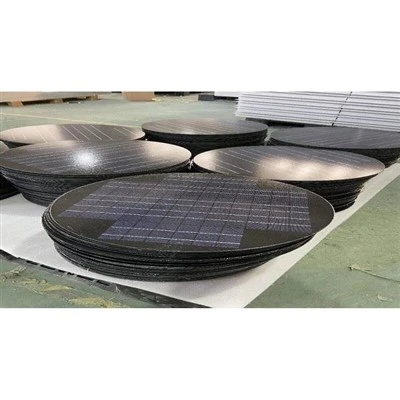
    Low Voltage Mini Solar Panel

    The Low Voltage Mini Solar Panel is a compact photovoltaic module for low-power electronic products and space-limited equipment. Its voltage, current, dimensions, cell configuration, encapsulation...

    Add to Inquiry
  • Mini Solar Panel for Arduino

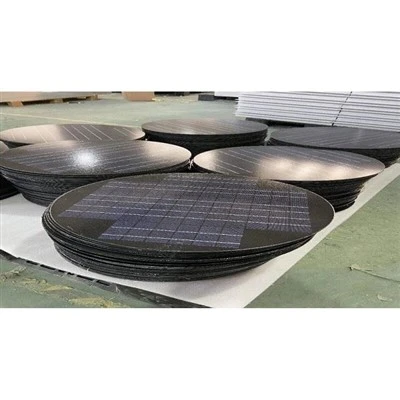
    Mini Solar Panel for Arduino

    Mini Solar Panel for Arduino is a compact photovoltaic module for Arduino-based devices, sensors, educational electronics, and low-power embedded products. Panel size, electrical output, cable...

    Add to Inquiry
  • Small Solar Panel for Electronics

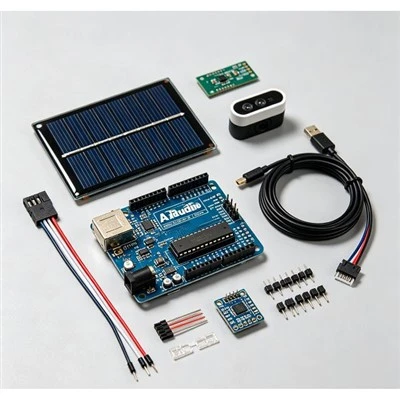
    Small Solar Panel for Electronics

    Small Solar Panels for Electronics are compact photovoltaic modules for low-power electronic devices, sensors, IoT products, and other space-limited applications. The modules can be customized in...

    Add to Inquiry
 
Technical Specifications


Parameter

Specification

Power Output

0.1W–20W, customizable

Voltage Range

1V–12V, customizable

Solar Cell Type

Monocrystalline / Polycrystalline

Monocrystalline Efficiency

Approximately 21%–23.5%

Encapsulation

PET / Epoxy Resin / Glass / Flexible

Operating Temperature

-20°C to +75°C

Cable & Connector

Customized cable length and connector options

Compliance

CE / RoHS / REACH / ISO 9001


Mini DIY Solar Panel Product Range & Typical Applications


Product Series

Structure / Characteristics

Typical Applications

Monocrystalline Mini Solar Panels

Monocrystalline silicon cells; conversion efficiency approximately 21%–23.5%; suitable for higher power output within limited installation space.

IoT sensors, portable electronics, smart monitoring devices, solar-powered products

Polycrystalline Mini Solar Panels

Polycrystalline cells; economical module option with stable photovoltaic performance and competitive production cost.

DIY solar kits, science experiment products, solar toys, entry-level electronic devices

PET Laminated Solar Panels

Thin and lightweight laminated structure; easy to integrate into product surfaces; custom sizes available.

Wearable devices, portable chargers, smart accessories, educational products

Epoxy Resin Solar Panels

Compact sealed structure with a smooth surface; suitable for small electronic products and DIY assemblies.

Small DIY projects, solar toys, mini electronic devices

Glass Laminated Solar Panels

Glass laminated structure providing mechanical protection and environmental protection for outdoor use.

Outdoor sensors, security devices, solar lighting products

Custom Shape & Flexible Solar Panels

Custom round, triangular, irregular or curved structures for products with non-standard installation surfaces.

Custom electronic products, curved product surfaces, special-shaped solar applications


Encapsulation & Structure Selection

PET Laminated Structure

PET provides a lightweight module structure for products where module weight, thickness and integration space are important considerations. Custom dimensions are available.

Epoxy Resin Structure

Epoxy resin provides a sealed structure with a smooth surface and compact form, making it suitable for small electronic devices, solar toys and DIY products.

Glass Laminated Structure

Glass lamination provides additional mechanical protection for modules intended for outdoor equipment and products exposed to the external environment.

Flexible & Custom-Shape Structure

Flexible modules can be considered for curved product surfaces, while round, triangular and irregular shapes can be developed according to the available installation area and cell arrangement.


Mini Solar Panel For Arduino


How to Specify a Suitable Mini Solar Panel for Your Project

Define the Available Installation Area
Provide the maximum length, width and available thickness inside the target product. Product dimensions determine the usable cell arrangement and achievable output.


Specify Electrical Requirements
Provide the target voltage, power or current requirement and, where applicable, the battery or electronic circuit that the module will supply.


Confirm the Module Structure
Specify whether the product requires PET, epoxy resin, glass or a flexible construction based on the installation environment and mechanical structure.


Provide Connection Requirements
Cable length, connector type and cable outlet position should be confirmed before sample production to match the customer's assembly process.


Provide Project Quantity & Drawings
Product drawings, application information and expected quantity allow the manufacturer to evaluate production feasibility and prepare a more accurate quotation.


Customization Options


Electrical Configuration

Power output and voltage can be customized within the product range according to cell selection, module dimensions and the electrical requirements of the customer's product.

01

Dimensions & Shape

Standard rectangular modules can be adapted to specified dimensions, while round, triangular and irregular shapes can be evaluated for products with non-standard installation areas.

02

Module Construction

PET, epoxy resin, glass and flexible structures provide different options for weight, thickness, mechanical protection and product integration.

03

Cable & Connector Configuration

Cable length and connector requirements can be specified according to the customer's internal wiring and assembly process.

04

OEM Identification & Packaging

Product labeling, nameplates, manuals and outer packaging can be confirmed for OEM orders according to the agreed project requirements.

05


OEM Development Process

Project Evaluation

The customer provides product drawings, technical requirements, application information and expected quantity. The requirements are reviewed before the module structure is confirmed.

Engineering Analysis

Engineering evaluation covers solar cell selection, power feasibility, module structure and production method to determine whether the requested configuration can be manufactured.


Prototype Development & Approval

Samples are produced for dimensional, electrical and product-integration verification. Cable configuration and other agreed details can be checked before mass production.


Mass Production

After sample approval, production follows the confirmed specifications and manufacturing procedures. The same approved configuration can be used as the basis for subsequent wholesale or OEM orders.


Manufacturing Process & Quality Assurance

Cell Selection & Sorting
Incoming solar cells are inspected and electrically classified before assembly. Cell matching helps reduce variation between cells used within the same module.


Laser Cutting & Cell Assembly
Solar cells are cut according to the required module configuration, then aligned and interconnected. Production inspection covers cell positioning and soldering quality.


Lamination & Encapsulation
PET, epoxy resin or glass structures are processed according to the selected module construction. Lamination forms the protective structure around the assembled cells.


Electrical & EL Testing
Finished modules are checked for electrical output, including Voc, Isc and power output. EL inspection can be used on semi-finished and finished modules to identify internal defects.


Final Inspection & Export Packaging
Final checks cover dimensions, cable connections, surface condition and packaging. Export packaging is prepared to reduce damage during international transportation.

Small Solar Panel For Electronics


FAQ


Q: What MOQ applies to Mini DIY Solar Panel orders?

A: MOQ depends on the selected module specification and order configuration. The applicable quantity can be confirmed when the project is quoted.

Q: Can I order samples before a production order?

A: Yes. Samples can be arranged for buyers who need to evaluate the product before placing a production order.

Q: How long does sample production usually take?

A: Sample production typically takes 3–5 business days, subject to the confirmed sample configuration.

Q: What is the typical lead time for a production order?

A: Mass production typically takes 15–20 business days after the production specifications are confirmed.

Q: Can we request specific wire gauges or specialized connector types soldered directly onto the solar output pads?

A: Yes, our engineering team can accommodate customized cable lengths, wire gauges, and specialized terminal connectors based on your internal wiring layout.

Q: How do you handle export packaging to protect fragile glass or thin PET laminated modules during international transit?

A: Modules are individually wrapped in protective foam layers, separated by cardboard dividers, and packed into reinforced export-grade corrugated cartons to minimize transit impact.

Q: What technical files or drawings must we submit to initiate a custom module evaluation?

A: Buyers typically provide 2D or 3D CAD drawings detailing the available installation recess, target electrical voltage, operating environment, and expected annual quantities.

As one of the most professional mini DIY solar panels suppliers in China, our products have good reputation in the market. Please rest assured to buy bulk premium mini DIY solar panels in stock here from our factory. For price consultation, contact us.

goTop

(0/10)

clearall